
Weasel Pit Made a Clone Threat, Then Played the Victim =UPDATED W/ DEV REPLY=
Iron Pilgrim's dev says an AI cloner wants $200 to stay off Steam. Weeks earlier, the dev's own account threatened another indie with that exact move.

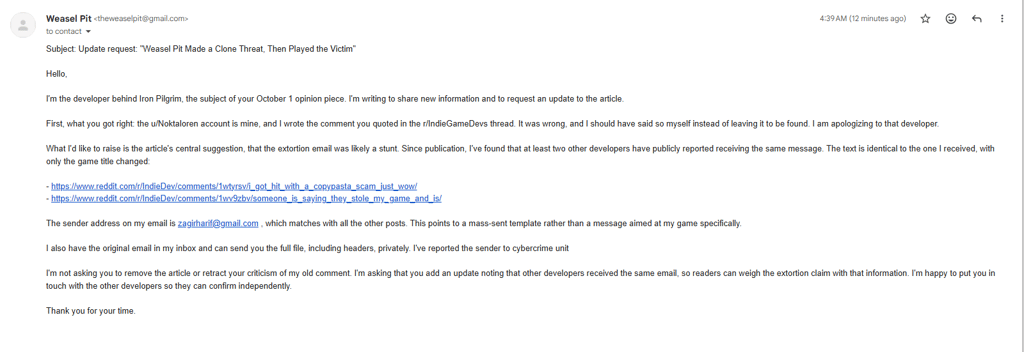
UPDATE: Dev reply we got after we published our article:
--------------------------------------------------------------------------------------
OG Article below:
Weasel Pit has a story for you: a stranger cloned its upcoming game Iron Pilgrim with AI and wants $200 to keep the copy off Steam. Don't believe it. Weeks before telling that story, the developer's own Reddit account threatened another indie dev with the exact same move: ship your game, and I'll put a copy of it on Steam. A developer who makes clone threats went viral as the victim of one. We think the Iron Pilgrim extortion is a stunt, and we're not buying it.
The sob story
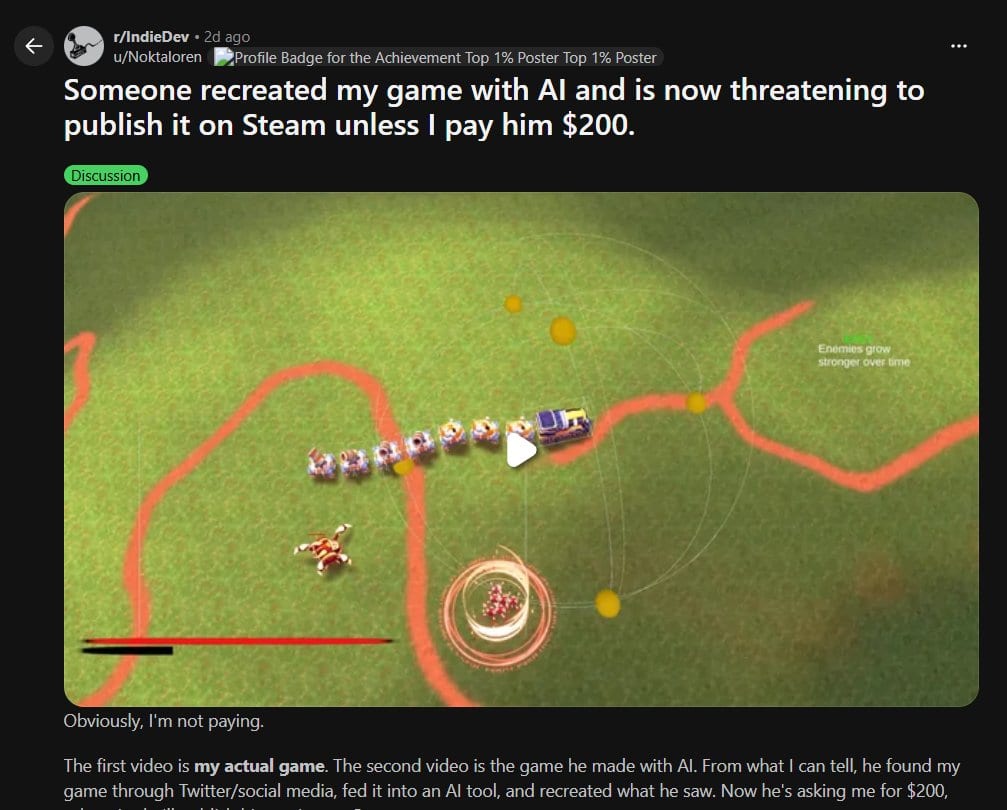
"Someone recreated my game with AI and is now threatening to publish it on Steam unless I pay him $200," the developer wrote on X, under a display name that doubles as an ad: "Weasel Pit - Wishlist Iron Pilgrim on Steam." "Obviously, I'm not paying." The post set Iron Pilgrim's footage next to the supposed clone and dressed itself up as a public service: "I'm sharing this as a heads-up because I assume I'm probably not the only indie dev he's doing this to."
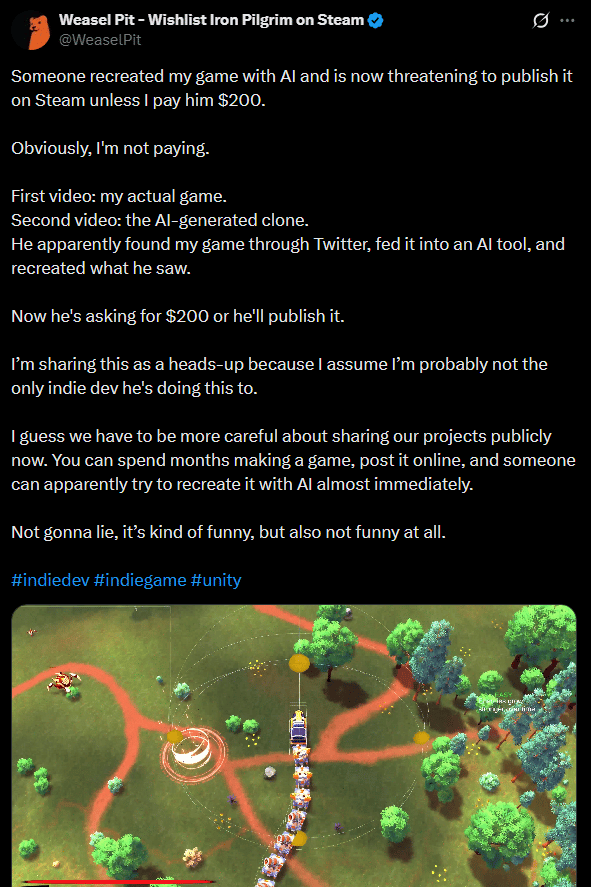
The warning on X, posted under a display name asking you to wishlist the game. (Image: Weasel Pit on X)
As proof, the developer posted an email from a "Zagir Harif" with the subject line "I have something for you." It demands "$200 worth of Steam items" and reads like a straight-to-video villain wrote it: "No more messages. No negotiations. You have 24 hours. After that, I publish. The choice is yours."
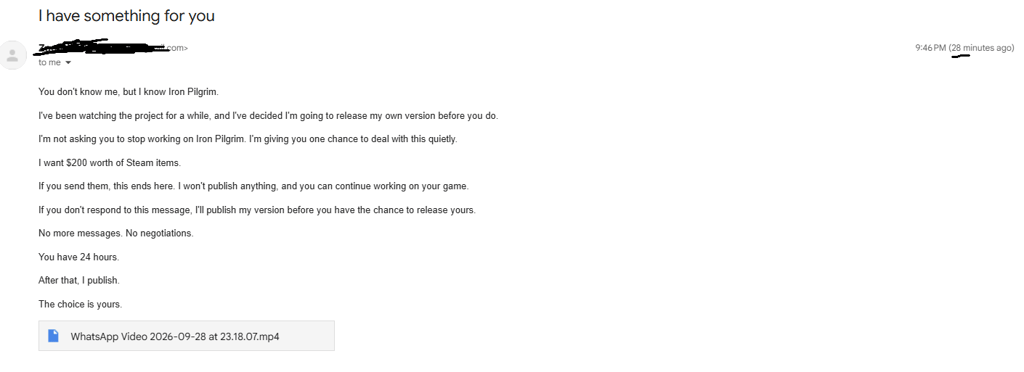
The "extortion" email the developer posted as proof. We've blurred the sender's address. (Image: Weasel Pit on X)
The same story went up on r/IndieDev from the account u/Noktaloren, which calls Iron Pilgrim "my actual game." Plenty of people shared it, sympathized, and saw the game. Then people scrolled back through u/Noktaloren's comment history.
The "victim" made the threat first
Weeks earlier, another developer had shared their own small game on r/IndieGameDevs, a clover hunt pitched with a simple hook: "35,000 clovers. Only ONE has four leaves. How long would you keep looking?" u/Noktaloren showed up in the comments with this:
"if you actually release this game on steam, i will make a free version of it and release on steam as well. This is a warning. I'm sick of these low effort games."
That post has since been deleted. The comment is still there.
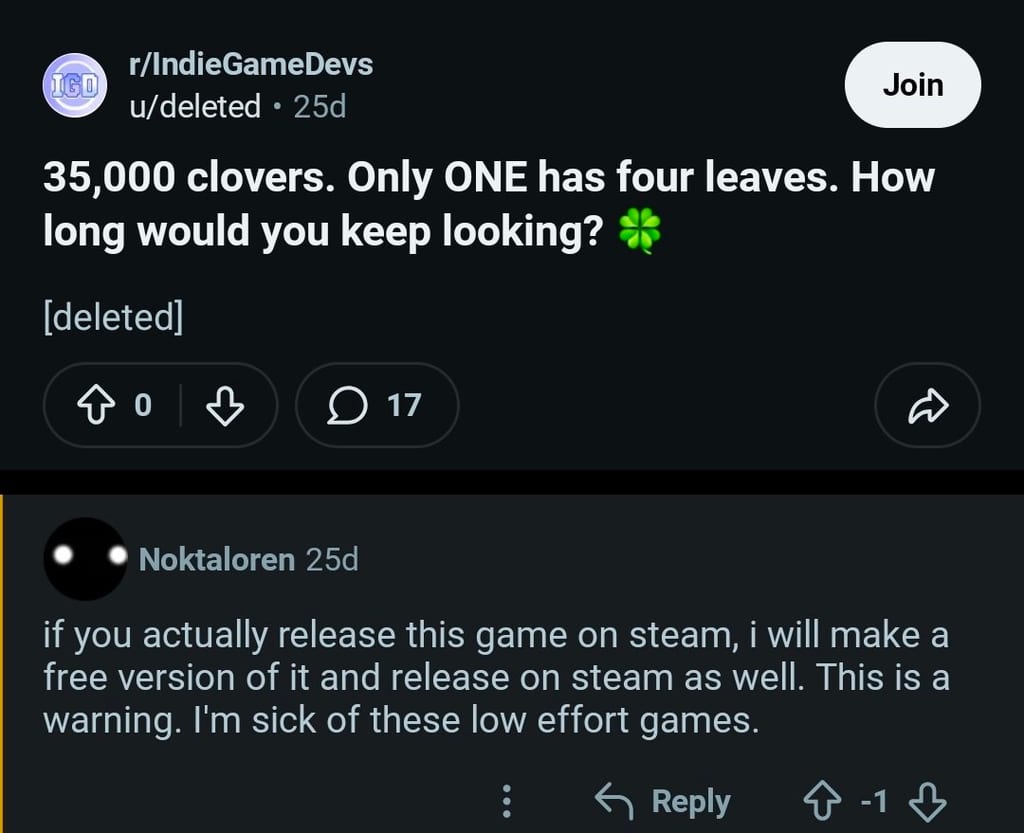
u/Noktaloren threatening another indie dev with a Steam clone. (Image: Reddit)
Weeks later, the same account plays the victim of the same threat. (Image: Reddit)
Read them side by side. "Release your game and I'll put a copy of it on Steam" is the threat Weasel Pit says it received. It is also the threat Weasel Pit's own account sent to a fellow small developer, nearly word for word. The cloner in Weasel Pit's story wants $200. The cloner in Weasel Pit's comment history offered to do it for free.
And when the developer posted that heads-up about predators targeting indie devs, the one thing that mattered was left out: "I've made this threat myself."
Every sign points to a stunt
Look at what the story delivered. A game that isn't due until Q3 2027 got its name, its footage, and a wishlist plug in front of a huge audience, wrapped in a story built for sympathy shares. The villain is a cartoon. The threat is one the developer already knew by heart, because they had used it on someone else. The tactic was the developer's own, and the developer was the only one who came out of it with more attention.
Lying for visibility is not marketing
We know how brutal it is to get noticed. Steam shipped 720 games in a single week in August, and most of them sank without a trace. That pressure is real, and we spend most of our time trying to help small games get seen.
But a growing number of developers have decided honesty is optional when wishlists are on the line. Fake controversies. Manufactured victimhood. Threats against other devs one month, sob stories the next. It works because the indie community is generous: when a small dev says they're being bullied or robbed, people rush to help. Weasel Pit cashed in that generosity. That is the part we can't let slide.
Real victims pay for this
AI knockoffs are a real problem, and real developers are getting hit by them. We covered how they are flooding Steam in AI Shovelware Is Drowning Honest Indie Games. The next developer who gets a genuine extortion email and posts it will hear "is this another Weasel Pit?" before anyone helps. Every fake warning makes the real ones easier to ignore.
And this story already has a real victim. A small developer shared their game, and Weasel Pit's account told them it would be copied and given away on Steam. Nobody passed that one around as a heads-up.
The fair counterpoint
Could the Iron Pilgrim cloner be real? It's possible. But a developer who has publicly threatened another dev with a Steam clone doesn't get the benefit of the doubt when a Steam clone threat lands in their own inbox. Explain the clover comment, and we'll listen.
What you can do
Don't reward it. Don't wishlist a game because of a sob story. Before you share a dev's "warning," spend 30 seconds on their post history. That's all it took for this one to fall apart.
When you catch a developer faking drama for attention, say so in public, with receipts, every time. Make sure the stunt costs more attention than it earns. Go after the lie, not the person: no DM pile-ons, no harassment, no digging into anyone's private life. Receipts and refusing to reward are what keep this scene honest, and they work better than a mob.
Iron Pilgrim, a train-mounted horde roguelite planned for Q3 2027 according to its Steam page, may turn out to be a fine game. Weasel Pit chose to sell it with a lie, and that's what people will remember.