Monsters are Coming! Review: A $9 Survivor on Wheels
Ludogram fuses survivor-style auto-combat with tower defense on a fortress that never stops moving. At $9, this little roguelite is an easy yes.
Worth Your Time
Half bullet-hell, half city builder, and for nine dollars the back-and-forth between the two is genuinely hard to put down.
Good for: survivors-like and tower-defense fans after a tense, build-chasing roguelite for short sessions.
Skip if: you bounce off auto-combat, or you want deep story, meta-systems, or multiplayer.
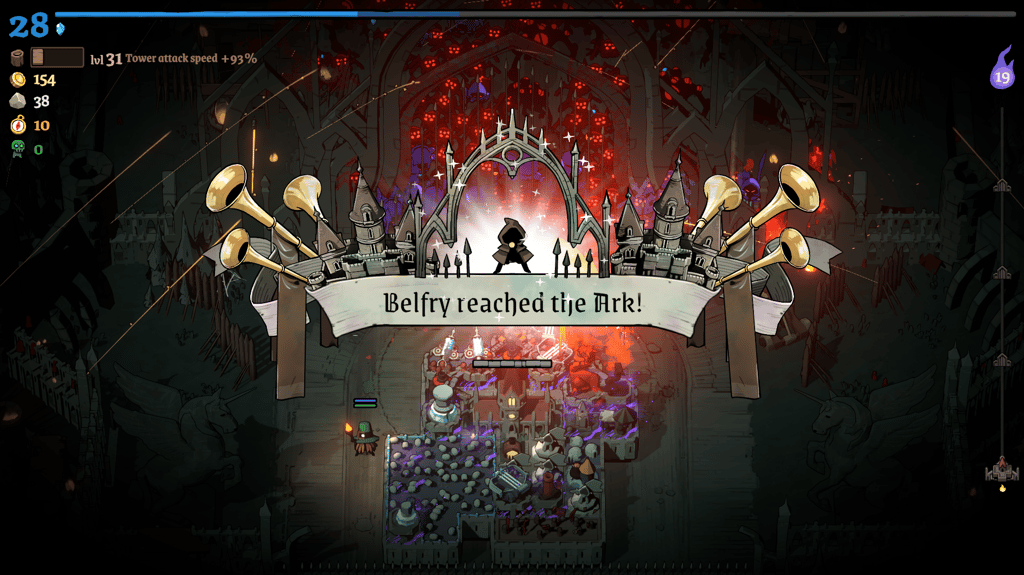
You are losing this city, and you are losing it in real time. A tide of skeletons is pouring in from every edge of the screen, and your one little hero cannot be everywhere at once. So you stop trying to be. You drop an archery outpost here, a necromancer tower there, scrape together enough wood and stone to bolt another district onto the walls, and let the city defend itself while you go put out the next fire.
That is the rhythm of Monsters are Coming! Rock & Road, the new tower-survivor from French studio Ludogram and indie publisher Raw Fury. It is one of the smartest nine-dollar games we have played this year, and most of that smarts is in how it makes you juggle.
What you're actually doing
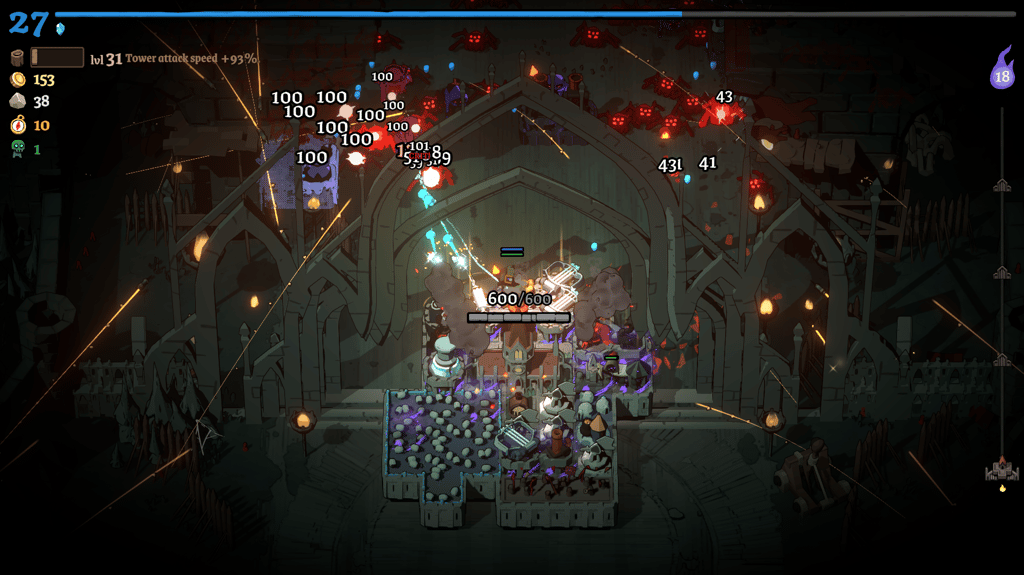
It wears its Vampire Survivors influence openly. You move, your hero attacks on their own, and the run is really about the build you assemble around them. What Ludogram stacks on top is a second job. While you are weaving through the usual survivor bullet-hell, you are also gathering resources (wood, stone, and gold) and spending them to raise a whole city that rolls forward the entire time, a fortress on wheels grinding toward a place called the Arch.
The two halves keep pulling at you. The survivor side wants you twitchy and reactive. The tower-defense side wants you planning three moves ahead, deciding which district to build, which tower to upgrade, and where the next wall has to go before the horde gets there. Holding both in your head at once is the whole tense, satisfying pull of a run.
A city that outlives its hero
Here is the choice that makes it stick: your hero can die, and the run keeps going. Fall in battle and the city rolls on without you. A run only ends when the city itself is overrun.
It quietly flips the survivors-like script. You are not the chosen one the world depends on. You are one moving part in a machine that has to outlast the dark on its own, so losing your character becomes a problem to recover from instead of an instant game over. The back half of a rough run turns into a scramble to keep the walls standing long enough to claw things back, and that scramble is where the game is at its best.
The upgrades are where it sinks its hooks
For a nine-dollar game, there is a surprising amount to chase, and it is layered the way the best roguelites are.
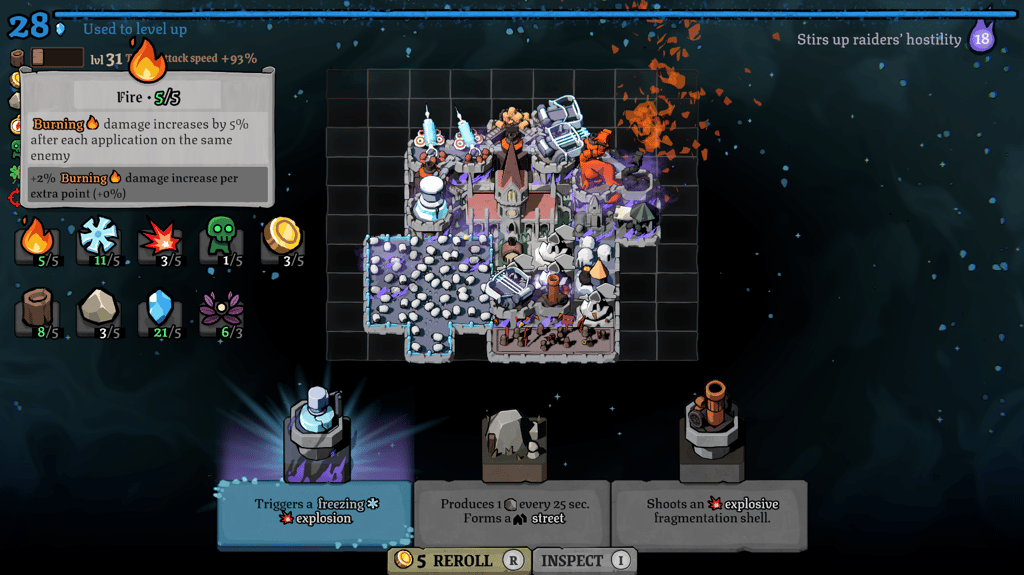
Inside a single run, your power grows from two directions at once. Your hero levels up survivor-style, picking new abilities as you go and unlocking more by beating the bosses you meet on the road to the Arch. At the same time you are pouring resources into the city, buying new districts, fortifying their defensive structures, and stacking upgrades into custom tower builds, so a thin line of basic archery outposts can become a wall of necromancers and dragons by the final stretch. The best moments are when those two layers click, when your hero's kit and your tower layout start covering each other's blind spots.
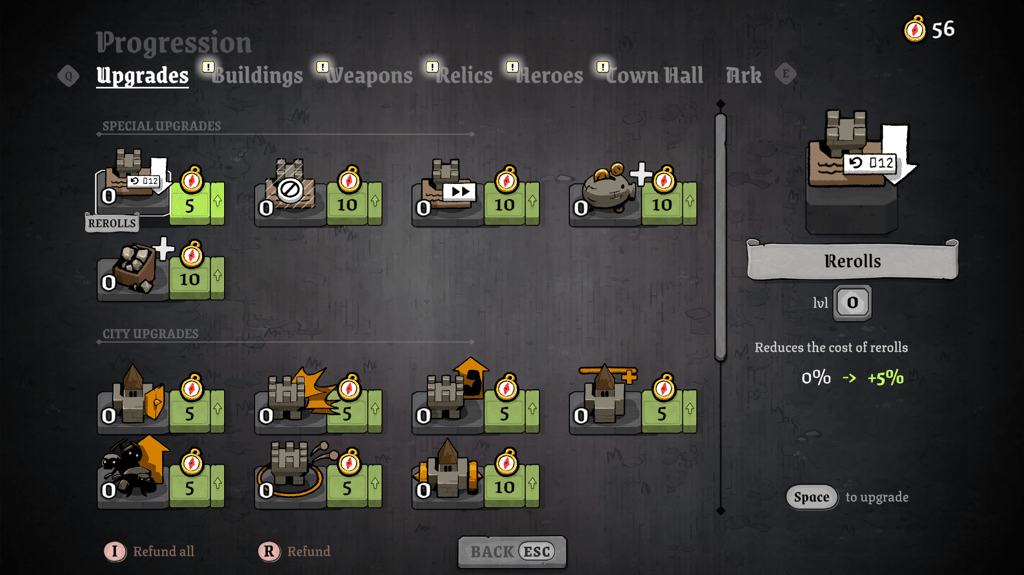
Between runs there is a longer game. Your progress is banked as compasses you carry forward, slowly opening up new options, and there is a roster of playable classes that each reframe how a run goes. Those two things, the class you commit to and the meta-progression you have stored up, are what pull you out of the early "every run feels the same" stretch and into chasing a specific build on purpose. It is the familiar roguelite loop, but the moving city gives every upgrade somewhere concrete to land, which keeps the grind from feeling like numbers going up for their own sake.
What ties it together is how little it asks of your evening. Runs are self-contained and quick to restart, the trickle of unlocks always dangles one more reason to go again, and on Steam Deck the pick-up-and-survive loop is close to ideal for a couch or a commute.
What holds it back
It is not flawless, and the thing that makes it tick is also where it strains. Doing two jobs at once can tip from exciting into fiddly. When the screen fills up, just reading what is happening, which district is about to fall, where your resources landed, where you even are, gets genuinely hard, and a run can slip away to clutter rather than to a mistake you would own. It is also a roguelite in the usual way, where the first handful of runs can blur together before you have unlocked enough for builds to feel distinct.
None of that sank it for us, and the Steam crowd has it at a Very Positive 82%. But it is the gap between a great little game and a great one, full stop.
Is it worth your money?
At $8.99, and 30% off as of this writing, yes, comfortably. It is on Steam, GOG, and Xbox Game Pass, so if you subscribe you can try it for the price of a download, and it is Steam Deck Verified and Xbox Play Anywhere if you want it in your hands. If you like survivors-likes and have ever wished one asked a little more of your brain, it is on Steam here
A few hours in, we were glad we grabbed it.